Foundation crack: causes, diagnosis and solutions
One foundation crack may simply be a concrete shrinkage mark or the sign of a movement affecting the building's stability. The difference cannot be determined solely by the width of the crack: its orientation, location, evolution, soil condition, drainage, and other symptoms observed in the building must be considered together. Before choosing a repair, the cause must therefore be understood.
Why does a foundation crack appear?
Concrete is a durable material, but it can crack for several reasons. Some cracks appear during drying and remain stable. Others are related to ground movement, poor drainage, unevenly distributed loads, or differential settlement. In Quebec, seasonal variations, freeze-thaw cycles, and changes in soil moisture can also influence the behavior of foundations.
It is therefore best not to automatically associate a crack with a single cause. An inspection of the foundation and the building helps determine whether the problem is localized, whether the crack is active, or whether it is part of a more global movement.
The main causes of a foundation crack
- Concrete removal: Fine cracks can appear as the concrete dries and shrinks.
- Ground motion: Certain soils can swell, shrink, or lose their bearing capacity.
- Differential settlement: part of the foundation is settling more than the rest, which creates stress in the walls and floors.
- Water pressure: Poor drainage can increase pressure on foundation walls and promote water infiltration.
- Freeze-thaw cycles: The water present in the soil can create seasonal movements around the foundation.
- Fees or modifications: an extension, an additional floor, or a structural transformation can modify the load distribution.
Vertical, horizontal, or staggered: what does the orientation mean?
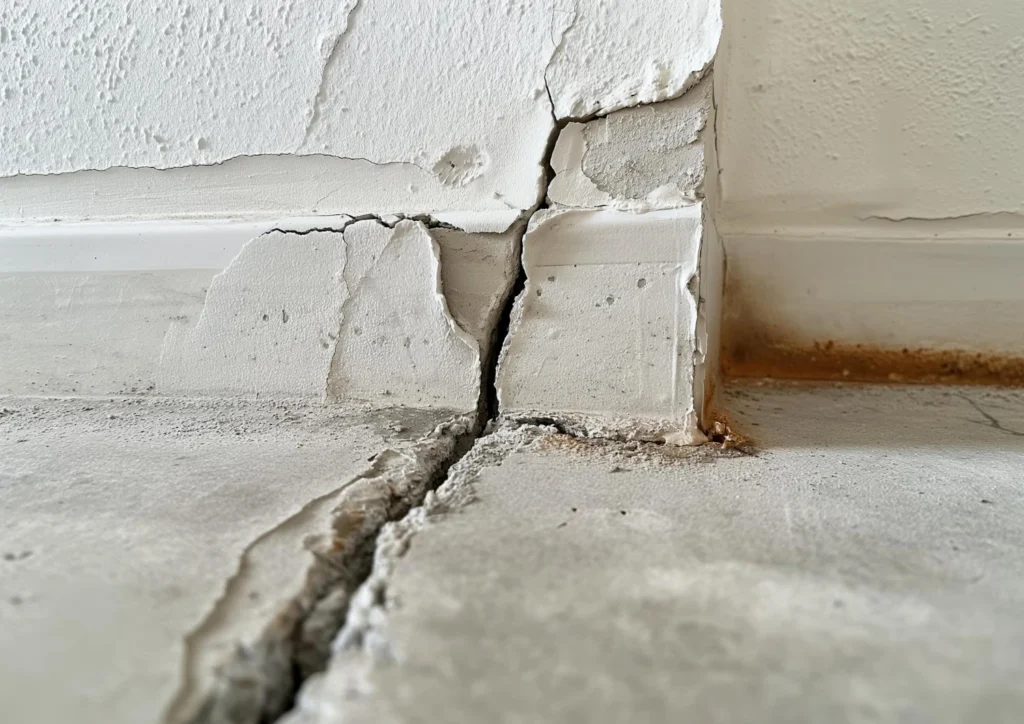
Orientation provides clues, but it does not constitute a diagnosis on its own. A fine vertical crack may be related to concrete shrinkage, while a significant horizontal crack on a foundation wall may indicate a different type of stress. Stair-step cracks visible in masonry may be associated with foundation movement or other building deformations.
The engineer also analyzes the crack opening, its apparent depth, the presence of seepage, and nearby deformations. A crack that has been repaired several times and reappears deserves special attention, as the cause may still be active.
What signs indicate that an inspection is preferable?
A new crack is not automatically urgent, but certain signs justify a quicker check: visible widening, displacement between the two sides of the crack, recurring water infiltration, a warping floor, sticking doors, or similar cracks in multiple locations. When the owner observes rapid evolution, it is helpful to take dated photos and limit cosmetic repairs before the evaluation.
BE3I conducts inspections and analyses as part of its service Structures and Foundations. The goal is to determine if the crack is primarily a waterproofing issue or if it is related to structural behavior that requires a different intervention.
The diagnosis of a foundation crack by an engineer
The diagnosis begins with the building's history: approximate year of construction, work carried out, date of appearance of the cracks and presence of specific events. The engineer then inspects the foundation and looks for clues elsewhere in the building. Level surveys, the observation of walls, floors, beams and masonry can help understand whether a movement is localized or generalized.
Depending on the context, a geotechnical assessment or additional investigations may be recommended.’Ordre des ingénieurs du Québec includes in particular deep foundations, piles, and retaining structures among the fields related to building structure and foundations.
Active or stabilized crack: an essential difference
A stabilized crack no longer seems to evolve over time, whereas an active crack continues to open, move, or reappear after repair. This distinction directly influences the solution. Waterproofing an active crack without addressing the movement can lead to new cracking or shift the problem to another area.
Monitoring can be simple or more instrumented depending on the case. Measurements taken on multiple dates, reference points, or surveys provide more reliable information on the evolution. The engineer decides on the appropriate method based on the severity and the context.
What repair solutions are possible?
There is no universal repair. A stable crack primarily related to waterproofing can sometimes be treated by epoxy or polyurethane injection, depending on the conditions. When the problem stems from drainage, correcting water management or the drain may be necessary. If load-bearing capacity or stability is at issue, structural reinforcement or underpinning may be considered.
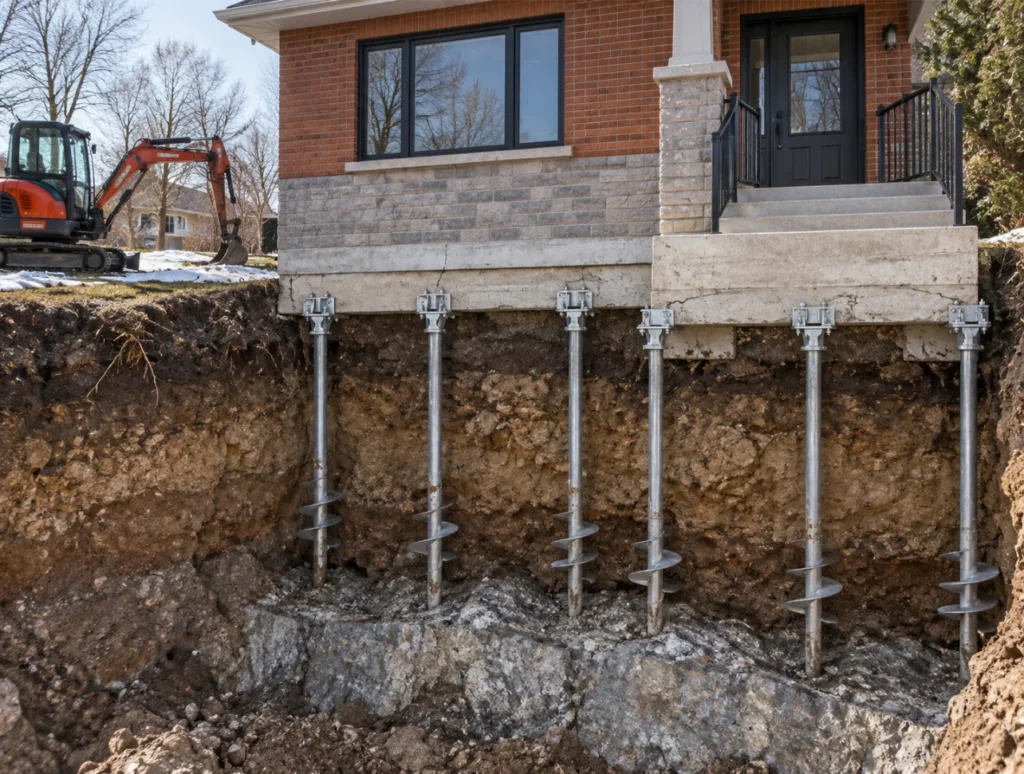
In cases of settlement, the foundation stabilization using piles can be part of the solutions, but it must be designed based on loads and soil characteristics. The proper sequence remains the same: diagnosis, solution design, plans when necessary, execution by a qualified contractor, and work inspection according to the mandate.
Why repair the cause before the symptom?
An aesthetic repair can improve the appearance of a crack without changing the mechanism that created it. If the ground continues to move, if water accumulates around the foundation, or if a load is improperly supported, the crack can return. That is why it is best to have the causes evaluated before undertaking major work.
This approach is also more effective for establishing priorities. Some repairs can be planned, while others require a quicker response. The analysis makes it possible to invest in a solution proportional to the real problem.
What to do before the engineer's visit?
Photograph the cracks, note the date they were observed, and gather available documents. If previous foundation work has been carried out, keep the invoices, reports, and plans. Avoid permanently sealing the cracks before the visit when it is not necessary for the safety or protection of the building.
If water gets in, also take photos after episodes of rain or melting snow. This information can help distinguish a sealing problem from a more complex movement.
When to request an assessment from BE3I?
An assessment is particularly relevant when the crack is evolving, when it is accompanied by subsidence, masonry displacement, or interior deformations, or when you are preparing for work that will modify the structure. BE3I can inspect the situation, document the observations, and recommend the next steps.
For a foundation crack in Greater Montreal, you can request a quote by attaching photos and a short description of the observed evolution.

Frequently asked questions
Should all cracks be repaired?
A crack may require waterproofing repair, monitoring, or structural intervention. The choice depends on its cause and progression.
Is one injection always enough?
No. Injection may be suitable for certain stabilized cracks, but it does not correct foundation settlement or active ground movement.
When do we talk about stabilization?
Stabilization is considered when the foundation or soil no longer supports loads properly and a structural solution must be designed to limit or stop movement.