
Reserve Fund Study: Law 16 Guide for Condominiums in Quebec
One pension fund study helps a condominium association plan long-term major repairs and the replacement of common elements. In Quebec, the regulatory framework for divided co-ownership has evolved: since August 14, 2025, associations have been required to have a maintenance log established and to produce a contingency fund study in accordance with the conditions set out in the regulation. For directors, the challenge is both technical and financial: knowing the condition of the building, anticipating work, and forecasting the necessary funds.
What is the purpose of a contingency fund study?
The contingency fund is intended to finance major repairs and the replacement of common elements when these expenses become necessary. A structured study avoids limiting oneself to an arbitrary percentage or an annual estimate unrelated to the actual condition of the building. It transforms the building's future needs into more predictable financial planning.
The report relies in particular on information from the maintenance logbook and on long-term planned work. The objective is to recommend the amounts to be maintained in the fund and the contributions necessary to reduce the risk of major special assessments when several major projects happen at the same time.
Law 16: what rules are in effect in 2026?
The Government of Quebec indicate that the new measures concerning the maintenance log and the contingency fund study have been in effect since August 14, 2025. According to the applicable transitional provisions, syndicates have a period of three years and one day to obtain their first documents when these were not already valid under the regulation.
The regulations also stipulate that the study must be obtained at least every five years. It must be based on major repairs and replacements anticipated for the common elements over a horizon of at least 25 years. These elements are important because they provide directors with a concrete framework for organizing the technical and financial planning of the co-ownership.
What does a contingency fund study contain?
The exact content depends on the co-ownership, but the bylaws require a minimum amount of information. The study takes into account the balance used as a starting point, the estimated costs for major repairs and replacements, as well as a recommendation on the amounts that should be available in the fund at the beginning of each year and the sums to be paid into it.
- Identification of the important common components of the building.
- Major works and replacements planned over the studied horizon.
- Cost estimation for the year in which the interventions are scheduled.
- Projection of contingency fund requirements.
- Recommendations on annual contributions.
- Explanation of the method used to establish the amounts.
The official text of Regulation establishing various rules regarding the divided co-ownership specify these requirements and provide that the study be signed and dated by its author.

The link between the maintenance logbook and the study
The maintenance log and the contingency fund study are complementary. The log describes the building's components, maintenance interventions, and repairs to be planned. The study then translates part of this technical information into financial needs over several years.
If the logbook underestimates the condition of a component, the financial projection is also likely to be less representative. Conversely, a rigorous inventory and a good understanding of the remaining useful life of the common elements make it possible to establish a more realistic schedule. For a syndicate, the quality of the technical component is therefore directly linked to the quality of financial planning.
Why the structural condition of the building matters in the projection
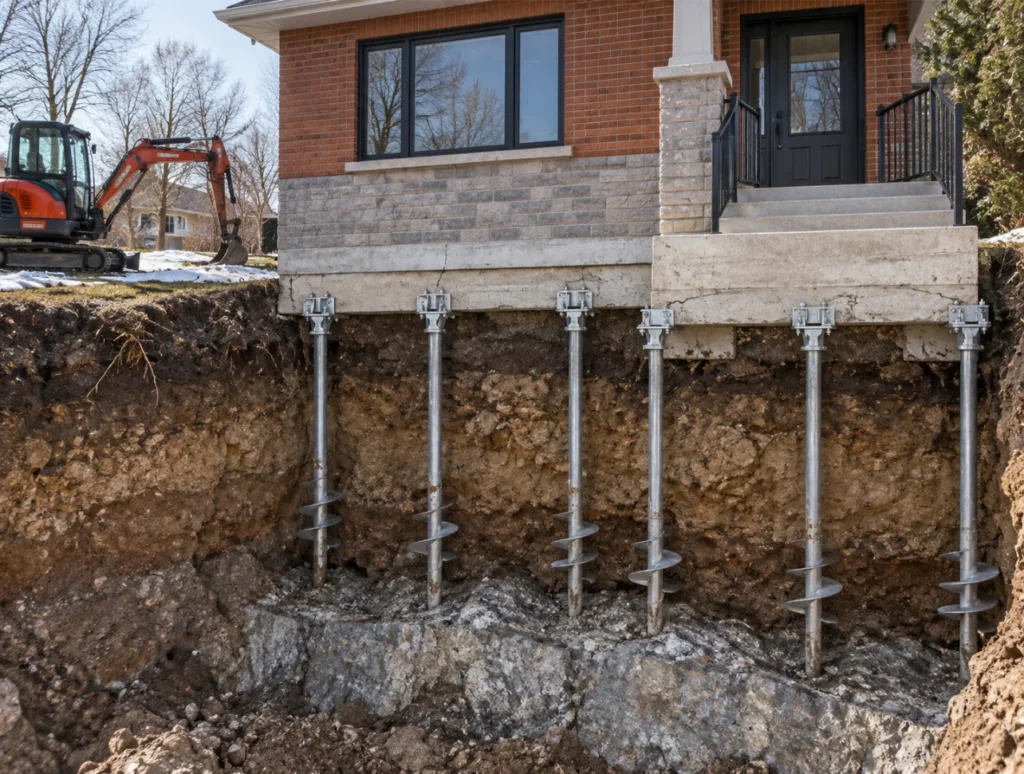
Structures, foundations, facades, balconies, parking areas, roofs, and other important components can represent costly work. A technical reading of their condition helps distinguish routine maintenance from a major repair or a planned replacement. An active crack, an infiltration problem, or the degradation of a concrete element can alter the scheduled timeline for intervention.
BE3I leverages its building structure expertise to document relevant components and integrate technical needs into the planning. The service Pension Fund Study is intended for condominium associations that wish to structure their obligations and obtain a portrait tailored to their building.
Which buildings and components must be considered?
Every condominium is different. A small masonry building does not have the same components as a tower with indoor parking, elevators, complex mechanical systems, and a high-rise building envelope. The study must therefore be tailored to the reality of the condominium rather than a generic model.
Common elements likely to incur significant expenses deserve special attention: roof, envelope, structure, foundations, balconies, parking, mechanical systems, and other common equipment. The schedule must also take into account their age, condition, work already completed, and the recommendations of the maintenance log.
Why a 25-year horizon changes syndicate management
A horizon of at least 25 years requires looking beyond immediate work. A roof that is still functional may need to be replaced in several years; a parking lot may require phased repairs; facade elements may call for periodic inspections, maintenance, and interventions. These expenses must be anticipated even if they are not urgent today.
This long-term vision also makes it possible to spread out contributions more gradually. The board of directors can explain to the co-owners why certain sums must be set aside today for future work, rather than waiting for a problem to become urgent.
How often should the study be updated?
The regulations require a new study at least every five years. This review makes it possible to incorporate the work actually carried out, changes in costs, the updated condition of components, and changes made to the building. A co-ownership that carries out major repairs or discovers a significant problem may also benefit from re-evaluating its planning before the normal deadline.
Follow-up between two studies therefore remains important. Invoices, inspection reports, plans, warranties, and maintenance interventions must be kept to facilitate future updates.
How to prepare the documents before hiring the professional?
The union can save time by gathering the available plans, old reports, the existing maintenance log, maintenance contracts, invoices for major work, warranties, and information on the current fund. The more complete the history, the better the professional can understand the interventions already carried out and avoid unnecessarily repeating certain research.
It is also useful to identify known issues: water infiltration, cracks, concrete degradation, recurring complaints, or equipment nearing the end of its lifespan. This information guides the visit and helps establish a more relevant profile.
Plan your contingency fund study with BE3I
BE3I supports Greater Montreal unions in preparing their pension fund study and in the technical analysis of the building's components. The objective is to provide a document that can be used by the board of directors and is consistent with the actual condition of the building.
To discuss your co-ownership property, the size of the building, and the documents already available, request a quote from BE3I. This will allow you to define the mandate and the necessary information before the visit.
Frequently asked questions
Is a study conducted before 2025 automatically invalid?
No. Transitional rules exist for certain documents produced before the entry into force of the regulation. It is necessary to check the date of the study and whether the conditions set out by the regulation are met.
Must the study be redone every year?
No. The regulations stipulate a minimum frequency of five years, but the syndicate must continue to monitor the condition of the building and the work carried out between studies.
Does the study replace the maintenance logbook?
No. The two documents are complementary: the logbook organizes technical monitoring and maintenance, while the reserve fund study reflects major financial planning needs.